
Seven AI Agents, One Orchestration Layer
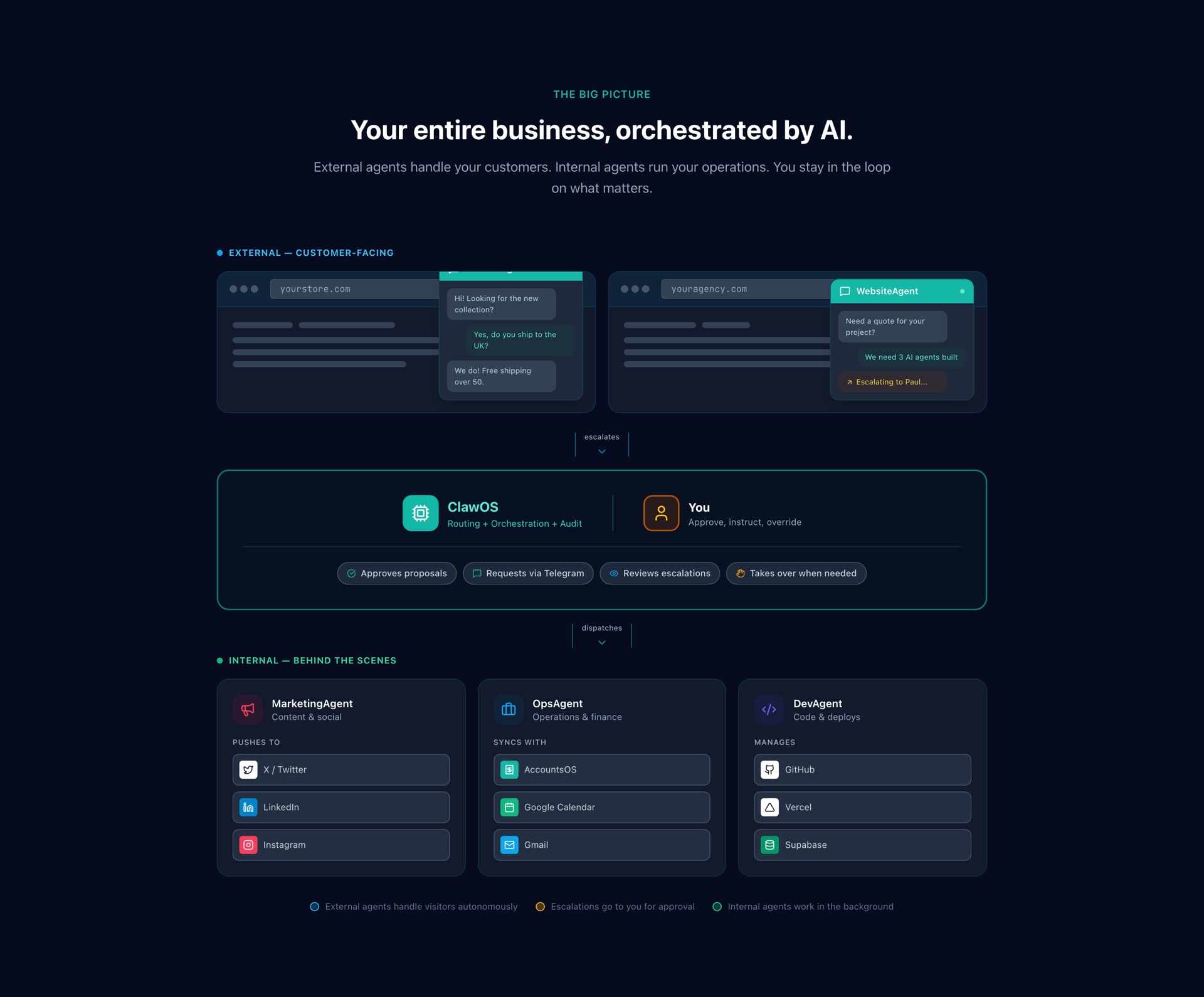
Built when the OpenClaw wave made personal AI agents mainstream overnight. ClawOS is the layer that turns that pattern into something a company can run on: routing, agent-to-agent handoff, approval gates and an audit trail, with every agent still just a folder of markdown.
OpenClaw Proved the Pattern. It Did Not Make It Safe to Run a Company On.
The personal-agent wave showed that an AI agent is not much more than markdown files, a capable model, and a scheduling loop. Thousands of people had one running overnight. Pointing that pattern at an actual business is where it falls apart:
One agent asked to cover sales, support, operations and development gives confused answers, because those jobs need different personalities, different tools and different boundaries
Nothing in the pattern decides which agent should answer, so a human ends up dispatching every message by hand
An agent that can send email, merge a pull request or promote a deploy with no approval gate, spend limit or audit trail is a liability rather than an employee
Platform alternatives hide the prompts, the reasoning and the pricing inside a vendor dashboard, so you cannot see what the AI did or why
“These challenges required a comprehensive, strategic approach to deliver exceptional results.”
An Orchestration Layer Over Agents That Are Still Just Markdown Files
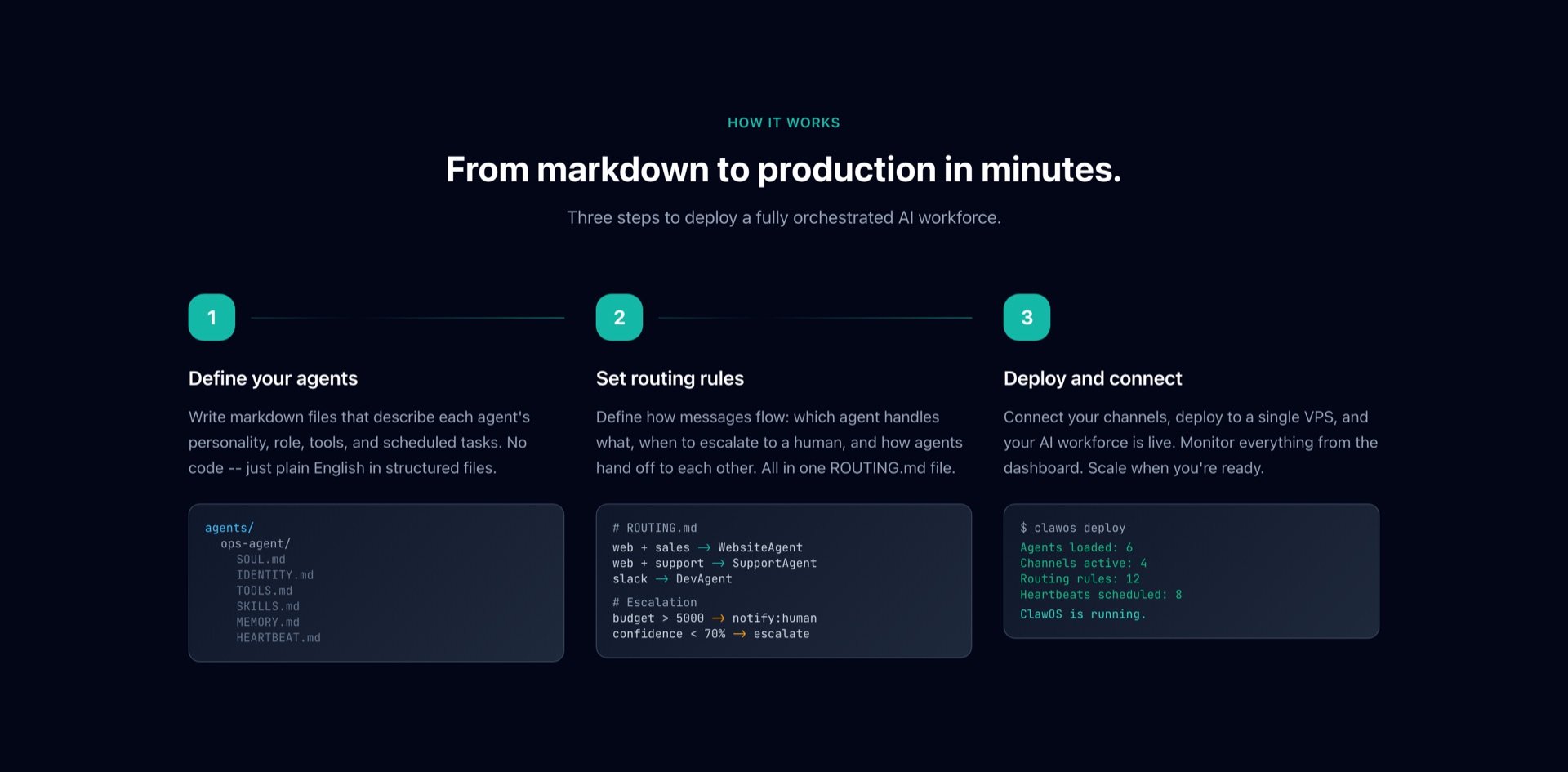
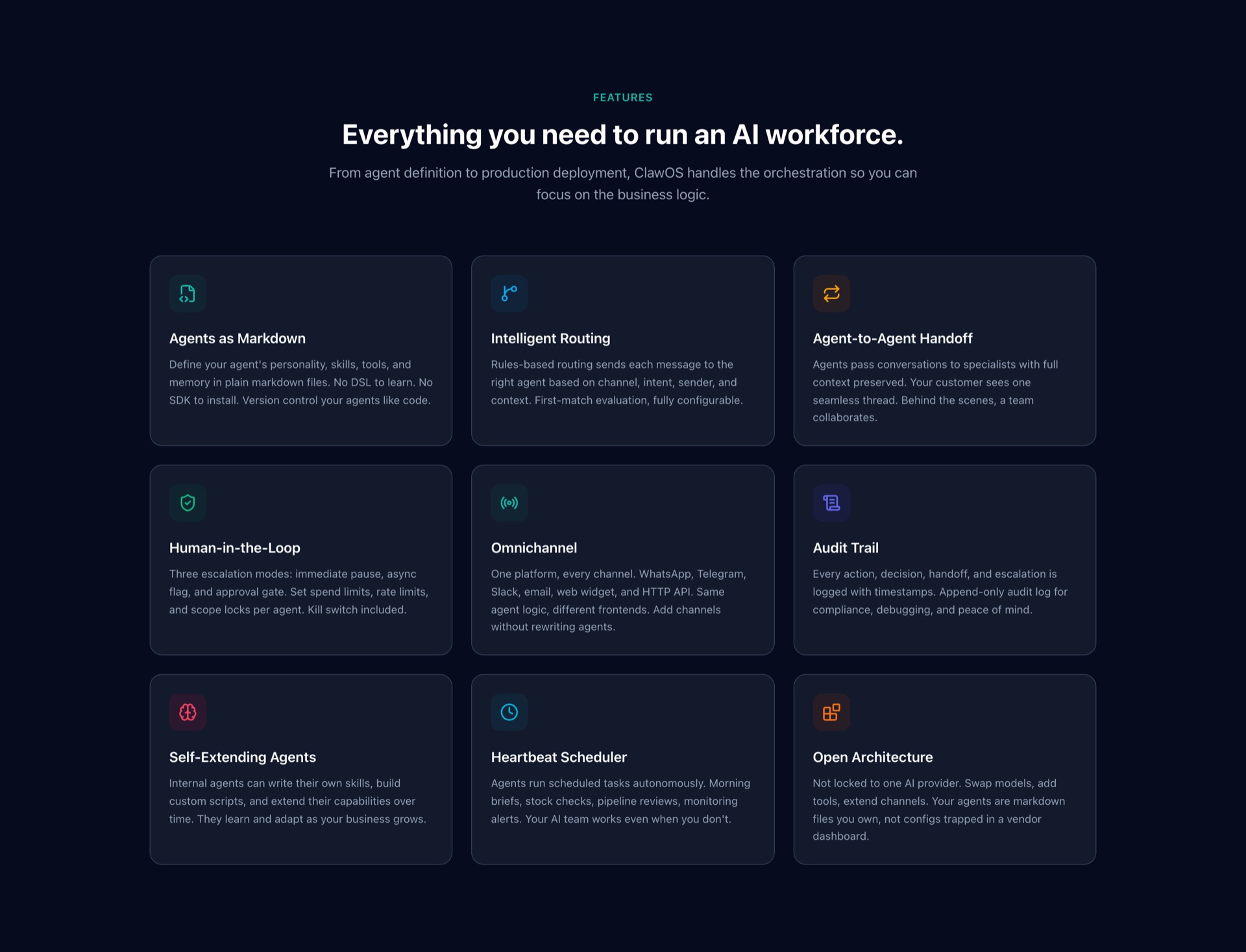
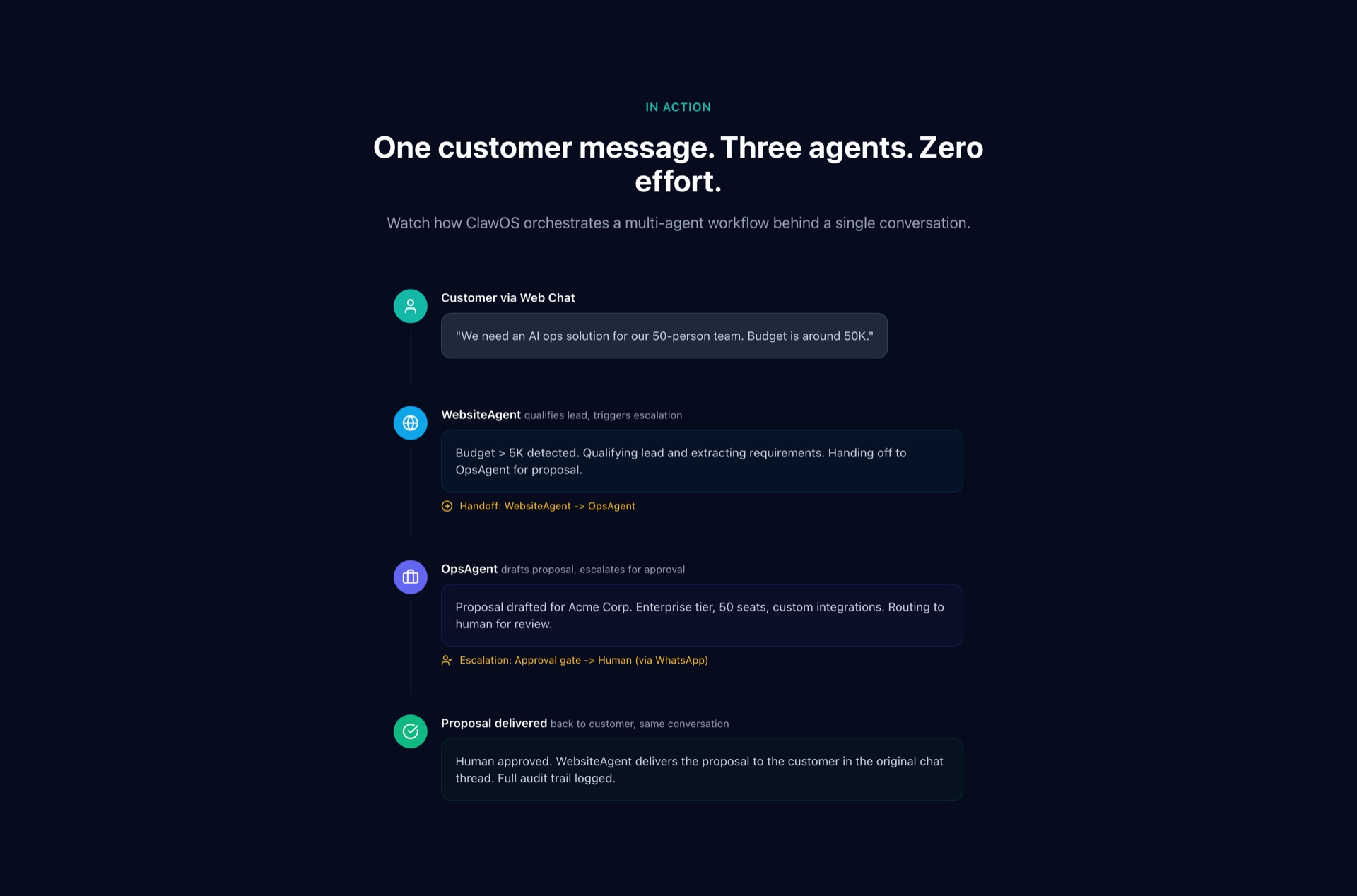
ClawOS keeps the part of the OpenClaw pattern that works, an agent described entirely in six plain markdown files (SOUL, IDENTITY, TOOLS, SKILLS, MEMORY, HEARTBEAT), and builds the missing business layer around it. A routing layer reads ROUTING.md top to bottom and dispatches each message to the right specialist. Agents hand conversations to each other with full context attached, so the customer sees one thread while a team works behind it. Three escalation modes decide when a human gets pulled in: pause immediately, flag for later, or hold delivery behind an approval gate that resolves when Paul taps Approve on a Telegram button. Every action, decision and handoff is written to an append-only log. Seven agents run today, six internal and one public-facing, on a single Hetzner VPS.
Built with
Key features
Built Fast, Then Pointed at Our Own Operations
ClawOS was not written as a demo. The first tenant was p0stman itself, which is the fastest way to find out whether an orchestration layer actually holds:
A Whole Agent Is Six Files
Personality, scope, tools, skills, memory and schedule, all plain markdown you can read, diff and version control. No SDK, no DSL, no vendor dashboard holding your prompts
Ten Integrations, Live and Tested
GitHub, Vercel, Gmail, Calendar, Drive, Docs, Sheets, Search Console, X and Grok, each a CLI connector returning a consistent JSON envelope so any agent can call it from bash
The Human Gate Actually Fires
Reads run free, writes get flagged, and anything destructive holds behind an approval gate that reaches Telegram with inline buttons. Approving a proposal is one tap, not a copied session ID
It Did Real Work
MarketingAgent drafted a thirty-post content calendar straight into the p0stman operations sheet, and the connectors were validated against live GitHub, Calendar, Drive, Sheets and Search Console accounts
“Delivering measurable impact across every metric.”
Ready to build something exceptional?
Enterprise transformation or a rapid AI-native build, same principle: one senior team, a fixed fee, and dates agreed before we start.