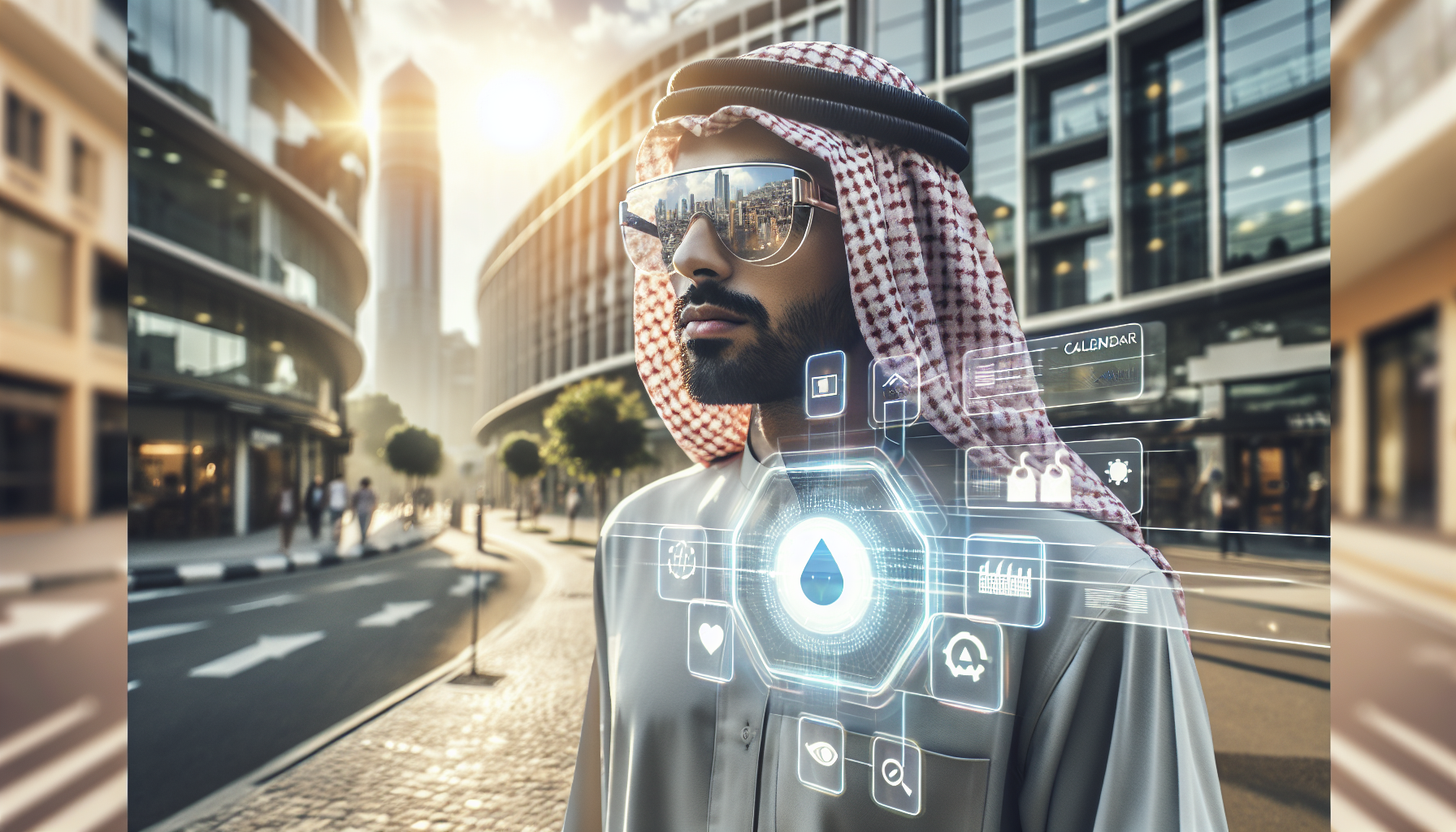
Ambient AI, where artificial intelligence is woven invisibly into every environment you move through, is a credible 2030+ reality, not a 2026 one. Single-device AI assistants are meaningfully better today, cross-device continuity will emerge for at least one platform by 2027-2028, and seamless home/car/office/wearable orchestration is still 5-7 years out. The opportunity for businesses is not waiting for that future. It is building the infrastructure and experiences that get them there first.
Every major technology company is converging on the same vision: AI that surrounds you, anticipates your needs, and acts across every device and environment without requiring your attention. Satya Nadella calls it "Copilot everywhere." Google's Rick Osterloh coined "ambient computing" at the 2019 Made by Google event. Amazon's Dave Limp introduced "ambient intelligence" at the same year's hardware event. Apple, characteristically, never named it but shipped Apple Intelligence across every device category in 2024.
The vision is coherent and, in the long arc, inevitable. But the current state of ambient AI resembles the mobile web in 2009. The iPhone existed. The App Store existed. Safari could render web pages. But the ecosystem was immature, the networks were slow, and nobody had figured out the interaction patterns that would define the next decade. We knew mobile would be transformative. We did not know it would take until 2013 for mobile web traffic to reach 20% of total, or until 2016 for it to surpass desktop.
Ambient AI is at a similar inflection. The building blocks exist. The integration does not. Here is an honest assessment of when each piece becomes real, who is best positioned to deliver it, and what can be built today by businesses unwilling to wait for the platforms to figure it out.
When does AI become truly ambient?
The word "ambient" does heavy lifting in technology marketing. Strip away the aspiration and define it precisely: ambient AI means artificial intelligence that operates across multiple devices and environments, is aware of your context without being asked, and acts proactively rather than reactively. By that definition, nothing shipping today qualifies. But the trajectory is clear, and the milestones are more predictable than the hype cycle suggests.
2025-2026: The single-device era matures
AI assistants are meaningfully better at single-device tasks than they were two years ago. Siri with Apple Intelligence can summarise notifications, generate email replies, and create images within the Apple ecosystem. Google Assistant powered by Gemini can hold multi-turn conversations, reason about on-screen content, and integrate with Google Workspace. Microsoft Copilot is embedded in Windows, Edge, and Office. Amazon's Alexa+ launched with LLM-powered conversational capabilities.
But all of these remain fundamentally reactive. You ask, they respond. Context awareness is limited to what is on the current screen or the last few turns of conversation. There is no meaningful handoff between devices. If you start a conversation with Siri on your iPhone and walk into a room with a HomePod, the context does not follow. If you ask Copilot to draft an email on your laptop and later reference that draft on your phone, it has no memory of the interaction.
This era is about individual AI assistants getting good enough at individual tasks that people actually use them. Adoption data suggests we are approaching that threshold. Apple reports that Siri requests are up 25% since Apple Intelligence launched. Google says Gemini is handling over a billion queries per month. The foundation is being laid, even if the building is not yet visible.
2027-2028: Cross-device continuity emerges
The critical capability that separates "AI assistant on a device" from "ambient AI" is continuity: the ability for context, memory, and active tasks to follow you across devices and environments. At least one platform will achieve this credibly by 2027-2028.
Apple is the most likely candidate. They control the hardware, the operating system, the silicon, and the cloud infrastructure across phone, tablet, laptop, desktop, watch, earbuds, headset, TV, speaker, and (eventually) car. The device graph is unmatched: over 1.5 billion active devices, with the average Apple household owning four or more. Apple Intelligence already shares some context across devices via iCloud. The missing piece is a persistent AI memory layer that travels with you, and there are strong signals this is in development.
Google is the second most likely. Android's scale (3+ billion active devices) is enormous, but the ecosystem is fragmented across manufacturers. Google's advantage is Gemini, which is arguably the most capable multimodal AI model available, and the deep integration with Search, Gmail, Calendar, Maps, and YouTube that gives it an unmatched data layer. The "Project Astra" demos at I/O 2024 showed an AI that could see through your camera, understand spatial context, and maintain conversational memory. It was a research demo, not a product, but the capability is real.
Proactive suggestions will also emerge in this window. Rather than waiting for you to ask, your AI will notice patterns: "You have a meeting in 30 minutes and traffic is heavy. Leave now." "Your energy bill this month is 40% higher than usual. Here is why." These already exist in primitive forms (Google Maps departure alerts, Nest energy reports) but the AI layer will make them substantially more useful and less annoying.
2030 and beyond: Seamless orchestration
True ambient AI, where the intelligence layer is invisible and the transitions between home, car, office, and wearable are seamless, is a 2030+ milestone. This requires not just better AI models (which are improving rapidly) but better infrastructure: always-on low-power processing in every device, ubiquitous connectivity, standardised inter-device communication protocols, and user trust built through years of the AI getting things right rather than wrong.
The honest assessment: the vision is 5-7 years ahead of reality. Anyone selling "ambient AI" as a current product is selling aspiration, not capability. But anyone dismissing it as science fiction is ignoring the pace of the underlying technology.
Ambient AI Timeline: Credible Milestones
AI assistants useful for single-device tasks
Siri, Gemini, Copilot adoption crosses mainstream threshold
Voice agents replace basic IVR systems
Smart home routines get LLM reasoning
Cross-device AI continuity (one platform first)
Proactive suggestions become useful 30%+ of the time
Smart glasses reach 10M+ annual sales
MCP/A2A achieve meaningful developer adoption
Seamless home/car/office/wearable orchestration
Proactive AI useful 60%+ of the time
Ambient executive assistant ($100-500/mo)
AR glasses as credible computing platform
What about the office?
The office may be where ambient AI arrives first, for a simple reason: the economic incentive is clearest. A knowledge worker who spends 30% less time on email, meeting prep, and status updates is worth tens of thousands of pounds more per year to their employer. The ROI calculation is straightforward in a way that "your lights turn on when you walk in" never will be.
The current state: Copilot and its competitors
Microsoft Copilot for Microsoft 365 is the most ambitious office AI deployment in history. At $30 per user per month (on top of existing M365 licensing), it embeds Gemini-class AI capabilities into Word, Excel, PowerPoint, Outlook, Teams, and the broader Microsoft Graph. Over 70% of Fortune 500 companies are piloting it. But the critical nuance: under 20% of those pilot organisations have reached meaningful seat-level adoption. Most are still in "we bought 500 licenses to test it" mode, not "every employee uses it daily" mode.
The reasons for slow adoption are instructive. Copilot is impressive in demos and inconsistent in daily use. It drafts emails that need heavy editing. It creates PowerPoint slides that look like they were made by someone who has never attended the meeting the presentation is about. It summarises meetings well but sometimes hallucinates action items that were never discussed. The technology is genuinely useful for specific workflows (catching up on missed meetings, first-draft email replies, data analysis in Excel) but not yet reliable enough for most people to change their habits.
Google Gemini in Workspace is following a similar trajectory, embedded in Gmail, Docs, Sheets, and Meet. Zoom has AI Companion, which transcribes meetings, generates summaries, and drafts follow-up emails. Slack has AI-powered channel summaries and search. Each is useful in isolation, none is transformative yet, and none talks to the others.
Smart meeting rooms
The physical office is also getting smarter. Cisco Webex devices now use AI to frame speakers, suppress background noise, and provide real-time transcription. Neat devices (from ex-Tandberg engineers) combine 4K cameras with AI-driven layout that makes hybrid meetings feel less like watching a surveillance feed. Owl Labs' Meeting Owl uses a 360-degree camera with AI speaker tracking. These are genuine ambient improvements: the technology adapts to the room without anyone configuring it.
But the AI in meeting hardware is still isolated from the AI in meeting software, which is still isolated from the AI in your productivity suite. The meeting room knows who is speaking but not what your calendar says about the meeting's purpose. The meeting AI generates a summary but does not update the project management tool. The Copilot in your email does not know what was decided in the meeting you just left.
The AI executive assistant: close but not here
The most compelling ambient AI office use case is the AI executive assistant: an always-on intelligence that manages your calendar, triages your email, prepares you for meetings with relevant context, follows up on action items, and learns your preferences over time. For narrow tasks, this is close. Scheduling AI (Reclaim.ai, Clockwise) works well. Email triage (Superhuman's AI features, Shortwave) is getting useful. Meeting prep (Otter.ai, Granola) is valuable.
But the multi-step orchestration that makes a real executive assistant valuable ("look at my calendar for next week, identify the three meetings I should cancel because they conflict with the board deck deadline, draft apologetic reschedule emails, and block focus time for the deck") requires agentic AI capabilities that are 2028-2030 for reliability. Startups like Lindy.ai are building exactly this, with multi-step workflows that chain AI actions together. The demos are compelling. The reliability in production, across the messy reality of different calendar systems, email providers, and enterprise security policies, is not there yet.
Are wearables the real ambient interface?
If ambient AI means intelligence that surrounds you without requiring a screen in your hand, then wearables are the most natural interface. You are already wearing things. Earbuds, glasses, a watch. The question is whether AI can be delivered through these form factors in a way that feels useful rather than intrusive.
The evidence from 2024-2025 provides a remarkably clear answer: it can, but only when the wearable augments an existing behaviour in a socially acceptable form factor. When it tries to be a standalone computing device, it fails catastrophically.
What works
Meta Ray-Ban smart glasses are the breakout success story. They look like normal Ray-Ban Wayfarers. They have a camera, microphone, speakers, and Meta AI built in. The "look and ask" feature (point your glasses at something, ask "what is this?") works surprisingly well. Over one million units sold in the first year, a number that exceeded Meta's own expectations. The key insight: nobody knows you are wearing a smart device. The social acceptability barrier, which killed Google Glass a decade ago, simply does not exist when the device looks like a pair of sunglasses people already want to own.
AirPods as an AI interface are inevitable but not yet shipped. Apple has laid the groundwork: AirPods Pro 2 have the H2 chip with enough processing power for on-device ML, head-tracking for spatial audio, and always-on "Hey Siri." The missing piece is making Siri good enough that interacting through earbuds is faster than pulling out your phone. With Apple Intelligence improving Siri's capabilities and the rumoured conversational Siri update, AirPods may become the first truly ambient AI interface for hundreds of millions of people. They are already in ears for hours a day. The behaviour change required is minimal.
Apple Watch and smartwatches serve a different ambient function: they are sensor platforms. Heart rate, blood oxygen, temperature, activity, sleep. The AI opportunity is not in the watch interface (screens too small for meaningful interaction) but in the data the watch generates. When that health and activity data feeds into an ambient AI that can reason about it ("your resting heart rate has been elevated for three days, and you have a heavy meeting schedule, consider lighter exercise today"), the watch becomes a critical input layer for the ambient system.
What failed
Humane AI Pin launched at $699 with a laser projector, camera, and a subscription-based AI assistant. The reviews were universally negative. The Verge called it "the solution to none of your problems." Battery life was poor. The laser display was unreadable outdoors. The AI was slow and frequently wrong. Within months of launch, the company explored a sale. The fundamental error: creating a new device category that required new behaviour (tapping a brooch on your chest, reading a projection on your palm) in a world where phones already do everything the Pin promised, faster and better.
Rabbit R1 launched at $199 as a handheld AI device with a scroll wheel and screen. It was pitched as a "large action model" that could operate apps on your behalf. In practice, it could not reliably order food, book rides, or complete most of the tasks demonstrated at launch. The device was, functionally, a less capable phone that could only talk to a handful of services.
Wearable AI: What Works vs What Failed
The differentiator is form factor, not capability
Working
Failed
The pattern: Successful AI wearables augment existing behaviour in socially acceptable form factors. The wearable is a sensor, not the product. The AI connecting the data is the product.
Smart rings and the sensor layer
Oura Ring (now in its fourth generation) and Samsung Galaxy Ring represent another model entirely: pure sensor, no screen, no speaker, no microphone. They collect biometric data (heart rate, HRV, temperature, blood oxygen, sleep stages, activity) and feed it to an AI on your phone that interprets it. This is, quietly, one of the most successful ambient AI patterns. You put on a ring and forget about it. The AI watches your body 24/7 and surfaces insights when they are useful.
The pattern is clear. The wearable succeeds when it disappears into an existing behaviour. Glasses you already wear. Earbuds you already use. A ring or watch you already have on. The AI is not in the wearable. The AI is in the cloud, connected to the wearable's sensors and your broader context. The wearable is an input device, not a computing platform.
What replaces the app store when the interface is voice?
If AI becomes the primary interface, what happens to the visual applications that currently dominate computing? This is not a theoretical question. It has been tested, and the results are instructive.
The Alexa Skills graveyard
Amazon launched the Alexa Skills Store in 2015 with the same ambition Apple had with the App Store in 2008: create a platform, let developers build on it, take a cut. By 2023, there were over 150,000 Alexa Skills available. The problem: almost nobody used them. The average Skill had near-zero monthly active users. Discovery was terrible because you cannot browse a voice-first app store the way you browse a visual one. You cannot see screenshots, read reviews at a glance, or compare alternatives side by side. You have to know the exact name of the Skill and ask for it by voice.
Amazon invested billions of dollars and more than a decade of effort into making Alexa a platform. The result was a commanding lead in smart home hardware installed base and a near-complete failure in third-party developer ecosystem engagement. The discovery problem was never solved.
Google's concession
Google Actions, the Google Assistant equivalent of Alexa Skills, was deprecated entirely in January 2023. Google effectively conceded that the third-party voice app model does not work. Rather than maintain a ghost town, they shut it down and redirected effort into making the Assistant itself more capable. This was a strong, honest signal from the company with the most AI talent and data in the world: voice-first app stores are a dead end.
Apple's pragmatic approach
Apple, characteristically, never built a voice app store at all. Instead, they created App Intents, a framework that lets existing iOS apps expose specific actions to Siri. Want to send a message via WhatsApp using Siri? WhatsApp registers that intent, and Siri can invoke it. This is the right model: the AI orchestrates existing applications rather than requiring developers to build separate voice experiences from scratch.
The emerging answer: agent-to-agent protocols
If voice app stores failed and Siri Shortcuts are too limited, what is the scalable model for AI-mediated services? The answer is emerging in 2025-2026: agent-to-agent communication protocols.
MCP (Model Context Protocol), published by Anthropic, defines how an AI model connects to external tools and data sources. A business exposes its services as MCP tools. An AI agent discovers and invokes those tools on behalf of the user. No visual interface required.
A2A (Agent-to-Agent), published by Google, defines how one AI agent communicates with another. Your personal AI agent can send a structured request to a business's AI agent: "book a table for two at 7pm on Saturday." The business agent checks availability, confirms the booking, and responds. No app download. No voice skill. Just two agents completing a transaction.
OpenAI Actions let ChatGPT plugins and GPTs call external APIs, creating a similar model where AI mediates the interaction with services.
The structural shift is profound. "Apps" become APIs and agents, not visual interfaces. Discovery shifts from browsing an app store to AI recommendation: your agent knows you need a restaurant and recommends one based on your preferences, location, and past behaviour. Monetisation shifts from one-time purchases and subscriptions to transaction fees and referral economics. Platform owners (Apple, Google, OpenAI, Anthropic) have enormous gatekeeper power in this model, potentially even more than in the current app store duopoly.
For businesses, the implication is urgent: exposing your services as AI-callable tools via MCP, A2A, or similar protocols is not a future consideration. It is a current competitive advantage. Businesses that are discoverable and actionable by AI agents will capture demand that those requiring a human to download an app and navigate a UI will not.
Who wins the ambient AI race?
Five companies have the scale, the data, and the distribution to build an ambient AI platform. None has all the pieces. Here is an honest assessment of each.
Platform Comparison: The Ambient AI Race
Assessed on current positioning, not aspirations
Apple
Strengths: 1.5B+ device graph, hardware/software integration, privacy positioning, consumer trust
Weaknesses: AI capability lags Google/OpenAI by 12-18 months, Siri reputation damaged by years of underperformance
Strategy: On-device processing, Apple Intelligence across all devices, partnership with OpenAI as capability bridge
Strengths: Best multimodal AI (Gemini), 3B+ Android devices, Search/Gmail/Maps data layer, YouTube
Weaknesses: Android ecosystem fragmented, privacy trust deficit, ad-driven model conflicts with agent commerce
Strategy: Gemini everywhere, A2A protocol, Pixel as showcase devices, Nest/Home hardware
Amazon
Strengths: Largest smart home installed base, Ring/Blink/eero, commerce integration, AWS
Weaknesses: No mobile platform, no wearables, Alexa+ disappointing, $10B+ cumulative losses on devices
Strategy: Alexa+ as LLM-powered home hub, commerce as monetisation lever, AWS Bedrock for enterprise
Microsoft
Strengths: M365 + Azure dominance, Copilot in every enterprise app, OpenAI partnership, LinkedIn data
Weaknesses: No consumer mobile/wearable/home presence, Surface marginal, Windows declining in relevance
Strategy: "Copilot everywhere" (enterprise), Copilot+ PCs, Azure AI infrastructure
Meta
Strengths: Ray-Ban glasses (hit product), 3B+ users (WhatsApp/IG/FB), Llama models (open source leverage), Quest VR
Weaknesses: No phone OS, no desktop, no smart home, trust lowest of all five, ad-dependent revenue
Strategy: Own the face (glasses/VR), AI through messaging (WhatsApp/IG), Llama as ecosystem play
The honest assessment
Apple wins the consumer ambient race if they can close the AI capability gap. Their device ecosystem, privacy stance, and consumer trust are unmatched. The risk is that Apple Intelligence remains a generation behind Google and OpenAI, and that the partnership with OpenAI becomes a dependency rather than a bridge.
Google wins the "best AI" race but may not win the "best experience" race. Gemini is extraordinary technology. But Google has a history of launching impressive AI demos and failing to ship coherent consumer products. The ad-funded business model also creates a tension with agent-mediated commerce: if AI agents are doing the browsing, who sees the ads?
Amazon is in trouble. Alexa was first to market by years, but the lead has evaporated. No mobile platform means no wearable strategy, which means no ambient presence outside the home. The $10+ billion investment in devices has not produced a profitable consumer business. Alexa+ needs to be substantially better than its predecessors to justify continued investment, and early reviews suggest it is not.
Microsoft wins the office and has no path to winning the home, car, or wearable. For enterprise ambient AI, they are the clear leader. For everything else, they are a spectator.
Meta is the most interesting wildcard. If smart glasses become the dominant ambient AI interface (a real possibility, not a certainty), Meta owns the leading product. If AI-powered messaging becomes the primary way people interact with services (already happening in India, Southeast Asia, and Latin America via WhatsApp), Meta owns the platform. The open-source Llama strategy also means Meta's AI models power thousands of applications they do not control but benefit from.
Room for third parties
At the platform level (operating system, hardware, AI model), the race is between these five. But at the application and integration level, there is enormous room for third parties. Vertical AI agents that understand specific industries. Integration layers that connect siloed enterprise systems. Custom AI assistants tailored to specific workflows. The ambient AI future will be built on platforms owned by big tech, but the value will be captured by businesses that build useful things on top.
What's real and what's hype?
The ambient AI narrative is a mix of credible near-term capabilities and aspirational long-term visions that are being marketed as imminent. Here is a separation of the two, with confidence levels.
Credible by 2027
- Meeting AI becomes invisible infrastructure (90% confidence). Transcription, summarisation, and action item extraction for every meeting, across Zoom, Teams, and Google Meet, running automatically in the background. This is nearly there already.
- Smart glasses reach 10M+ annual sales (75% confidence). Meta Ray-Ban is already at 1M+ in year one. Version 2 and 3 will add displays. Competition from Samsung, Google, and others will expand the category. Smart glasses will be the fastest-growing wearable category by 2027.
- Voice agents replace most IVR systems (80% confidence). The call centre "press 1 for billing, press 2 for support" experience will be replaced by conversational AI for most large businesses. The technology works today. Adoption is a procurement cycle issue, not a technology issue.
- MCP/A2A achieve meaningful developer adoption (65% confidence). Not universal, but enough that early-adopting businesses see measurable benefit from being AI-discoverable and AI-actionable. The "should we expose our service as an MCP tool?" question enters mainstream product strategy.
Credible by 2030
- Cross-device AI continuity from at least one platform (80% confidence). Apple or Google will ship this. The question is how seamless it actually feels in practice versus in the keynote demo.
- Proactive AI suggestions useful 60%+ of the time (60% confidence). This requires a level of personalisation and context understanding that is technically achievable but socially complicated. How much access do you give an AI to your calendar, email, health data, and location to make its suggestions useful? The answer will vary by person and culture.
- Ambient executive assistant as a product category ($100-500/mo) (70% confidence). For executives and high-value knowledge workers, the combination of email triage, calendar management, meeting prep, and follow-up automation will be packaged as a subscription product. The first credible versions will appear by 2028. Mass market by 2030.
- AR glasses as a credible computing platform (55% confidence). Apple Vision Pro proved the display technology works. The form factor needs to shrink dramatically. By 2030, expect lightweight AR glasses (not goggles) with enough display quality for notifications, navigation, and contextual information overlays. Not a phone replacement, but a meaningful new category.
Hype: unlikely by 2030
- "The phone is dead". No. The phone remains the central hub for ambient AI. It has a screen (still essential for many tasks), connectivity, processing power, and a mature ecosystem. Wearables and ambient devices augment the phone. They do not replace it. Not by 2030, and likely not for a long time after.
- Fully autonomous AI agents that act on your behalf unsupervised. The liability, trust, and accuracy challenges are enormous. AI agents will be incredibly useful as draft-and-confirm tools (the agent proposes, you approve). Fully autonomous agents that spend your money, send communications on your behalf, and make decisions without confirmation are a decade or more away for most use cases.
- Amazon winning the ambient AI race. Without a mobile platform or wearable strategy, Amazon is structurally unable to deliver ambient AI outside the home. Alexa will continue to be the best smart home voice platform, but that is a shrinking share of a growing market.
- Standalone AI hardware devices succeeding. The Humane and Rabbit experiments have settled this question definitively. The phone is too good, too present, too necessary. AI hardware that does not piggyback on an existing form factor (glasses, earbuds, watches) will continue to fail.
The privacy question
Will privacy concerns stop ambient AI adoption? History says no. People expressed concern about smartphones knowing their location, social media knowing their preferences, and smart speakers listening in their homes. Adoption was not meaningfully slowed. Privacy does shape architecture (Apple's on-device processing, the EU's AI Act, GDPR) and it creates competitive differentiation (Apple vs Google on data practices). But it does not stop adoption when the value proposition is strong enough. Ambient AI will follow the same pattern: privacy-conscious implementation will be a feature, not a barrier.
What can be built right now?
While the platforms figure out the grand vision, businesses have an opportunity to build the components that will matter most when ambient AI arrives. The infrastructure layer, the integration layer, and the experience layer are all wide open.
Custom voice experiences (GBP 5,000-50,000)
Voice AI has crossed the reliability threshold for production use in specific contexts. Customer service agents that handle first-line queries, appointment booking systems, order status and tracking, product recommendation through conversation. The technology stack (Gemini, GPT-4o, ElevenLabs for synthesis, Deepgram or Whisper for recognition) is mature enough for deployment today. The cost range reflects complexity: a simple appointment booking voice agent sits at the lower end, a multi-turn conversational agent integrated with CRM, inventory, and payment systems sits at the upper end.
This is the most accessible entry point for businesses. A voice AI that handles 30-50% of inbound calls saves real money immediately and builds the data foundation for more sophisticated ambient experiences later.
Workplace AI integration (GBP 10,000-50,000)
Most businesses have 5-15 SaaS tools that do not talk to each other. CRM, project management, email, calendar, document storage, accounting, HR. Each now has its own AI features. None coordinates with the others. Building integration layers that connect these tools through AI orchestration, so the CRM knows what was discussed in the meeting, the project tool knows what was agreed in the email, and the accounting system knows what was committed in the proposal, is valuable today and essential tomorrow.
Smart space integration (GBP 15,000-100,000)
Hotels, offices, retail spaces, and healthcare facilities can implement ambient intelligence today through sensor networks, voice interfaces, and AI-driven automation. Occupancy-based energy management. Voice-controlled room services. Predictive maintenance based on equipment data. Personalised guest experiences based on preference data. The technology exists. The integration work is where the value is created.
Vehicle and fleet AI (GBP 20,000-200,000)
Connected vehicles generate enormous amounts of data. Fleet management companies, logistics providers, and automotive businesses can use AI to optimise routing, predict maintenance needs, manage energy consumption, and improve driver safety. The in-cabin experience (voice-controlled navigation, proactive alerts, contextual information) is a near-term ambient AI use case that drives real operational value.
Agent infrastructure (MCP/A2A)
Exposing your business's services as AI-callable tools is not expensive to implement but is enormously valuable in positioning. When AI agents start recommending and booking services on behalf of users (a 2027-2028 reality for early categories), businesses with MCP endpoints, A2A agent cards, and well-structured API documentation will capture demand that those without will miss entirely. This is the SEO of the ambient AI era: invisible to humans, critical for machines.
Market Opportunity: AI-Adjacent Markets
Current market size vs projected 2030 (USD billions)
The market opportunity
The numbers behind ambient AI are large and growing fast. The conversational AI market alone is projected to grow from $13.9 billion to $49.9 billion by 2030, a 24% compound annual growth rate. AI in the smart home market is projected to reach $24.5 billion, up from $6.8 billion. Enterprise AI assistants are expected to grow from $4.1 billion to $19.2 billion.
These are not speculative projections for a technology that might work. They are growth rates for categories that already have working products and paying customers. The question for businesses is not whether ambient AI is real. It is whether they will be positioned to capture value from it when the convergence accelerates.
The window for building infrastructure, gathering data, and establishing AI-ready services is now. By the time ambient AI is mainstream, the early movers will have years of data, user behaviour understanding, and integration depth that latecomers cannot replicate quickly. The analogy to mobile is apt one final time: the businesses that built mobile-first experiences in 2010-2012 dominated the categories that went mobile-first in 2014-2016. The timeline for ambient AI may be longer, but the dynamics are the same.
Frequently Asked Questions
When will ambient AI become a reality?
Ambient AI is emerging in phases rather than arriving as a single event. Single-device AI assistants are meaningfully useful today (2025-2026). Cross-device continuity, where context follows you from phone to laptop to car, is credible for at least one platform by 2027-2028. Seamless orchestration across home, car, office, and wearable is a 2030+ milestone. The vision is 5-7 years ahead of current reality, similar to the mobile web in 2009: the building blocks exist but the ecosystem is immature.
Which company will win the ambient AI race?
No single company holds all the pieces. Apple has the strongest consumer device ecosystem (1.5B+ devices) and privacy advantage but lags on AI capability. Google has the best multimodal AI (Gemini) but a fragmented Android ecosystem. Amazon has the largest smart home installed base but no mobile or wearable platform. Microsoft dominates enterprise AI but has no consumer presence. Meta is the dark horse with smart glasses and messaging platforms. The most likely outcome is platform-specific winners rather than one dominant player, with significant opportunity for third parties at the application and integration layer.
Are standalone AI hardware devices worth buying?
The evidence from 2024-2025 strongly suggests no. The Humane AI Pin ($699, universally negative reviews, explored sale within months) and Rabbit R1 ($199, could not deliver on promises) both failed for the same reason: they required new behaviours in new form factors when the phone already does everything they promised, better and faster. Successful AI wearables, like Meta Ray-Ban smart glasses and AirPods, augment existing behaviour in form factors people already use. The wearable is a sensor layer. The AI connecting the data is the product.
What replaces the app store when AI is the interface?
Voice-first app stores have been conclusively tested and have failed. Alexa Skills (150,000+ published, near-zero usage) suffered from unsolvable discovery problems. Google Actions was deprecated entirely in January 2023. The emerging answer is agent-to-agent protocols: MCP (Anthropic), A2A (Google), and OpenAI Actions. Apps become APIs and agents rather than visual interfaces. Discovery shifts from browsing app stores to AI recommendation. Businesses that expose services as AI-callable tools gain first-mover advantage in this transition.
How much does it cost to build ambient AI experiences?
Costs vary significantly by scope. Custom voice AI experiences (booking agents, customer service, product recommendation) range from GBP 5,000 to 50,000. Workplace AI integration connecting multiple SaaS tools through AI orchestration runs GBP 10,000 to 50,000. Smart space integration for hotels, offices, or retail spaces costs GBP 15,000 to 100,000. Vehicle and fleet AI systems range from GBP 20,000 to 200,000. The critical insight is that building this infrastructure now creates data advantages that compound over time.
Is the phone going to be replaced by AI wearables?
Not by 2030, and likely not for a long time after that. The phone remains the central hub for ambient AI because it has a screen (still essential for many tasks), connectivity, processing power, and a mature app ecosystem. Wearables will augment the phone, not replace it. Smart glasses may eventually shift some interactions away from the screen, but that is a decade-plus transition. The more accurate framing is that the phone becomes one node in a multi-device ambient system, rather than the sole computing device.